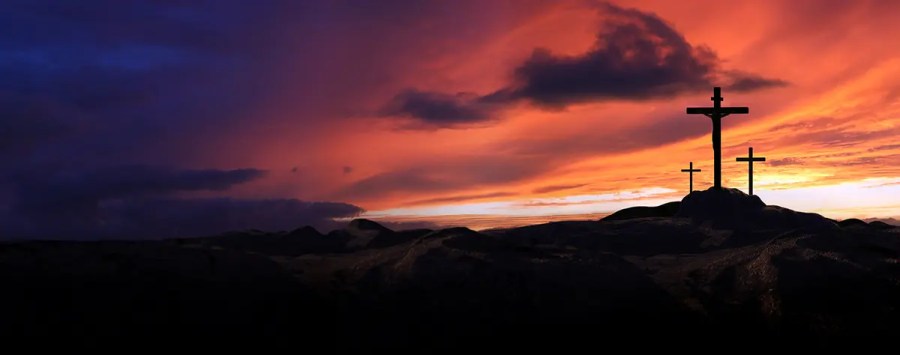
The sky went dark at midday.
Not evening. Noon.
The light slipped away, and an unnatural shadow settled over the hill. The crowd grew quiet. Something was happening no one could explain.
And then it came.
“My God, my God, why hast thou forsaken me?”
It does not sound like peace. It sounds like rupture.
And it is the only recorded prayer of Jesus that does not begin with “Father.”
That is the moment.
All through His life, Jesus spoke with nearness. “Father” was His word. In the wilderness, in the garden, in surrender. But not here.
Here, the word changes.
“Father” is the language of fellowship.
“My God” is the language of judgment.
At the cross, Jesus steps into what sin creates. Sin separates. It places distance between a holy God and a guilty man. And now Christ stands in that distance.
He feels what separation feels like.
The silence.
The weight.
The distance.
Not for His sin.
For yours.
For mine.
His words reach back to Psalm 22:1, a psalm that begins in anguish and ends in victory. This is not chaos. This is purpose. The plan of God is unfolding in its darkest hour.
And still, He says, “My God.”
Even here, He asks why. Not in unbelief, but in suffering. The question is real. The pain is real. But so is the faith.
“My God…Why?”
You have felt something like this. A prayer that seemed to go no further. A moment when heaven felt quiet, and you wondered why.
Why this?
Why now?
Why the silence?
The cross does not dismiss those questions. It meets them. Christ has already stood in the place where the question is asked and heaven is silent.
But you will never stand where He stood.
He was forsaken so we would never be.
Because of that moment, you do not come to God at a distance. You come as a child.
You say, “Father.”
And you are heard.
He took your distance so you could draw near.
 A Good Word