
History remembers builders. Not just of towers and bridges, but of anything that lasts.
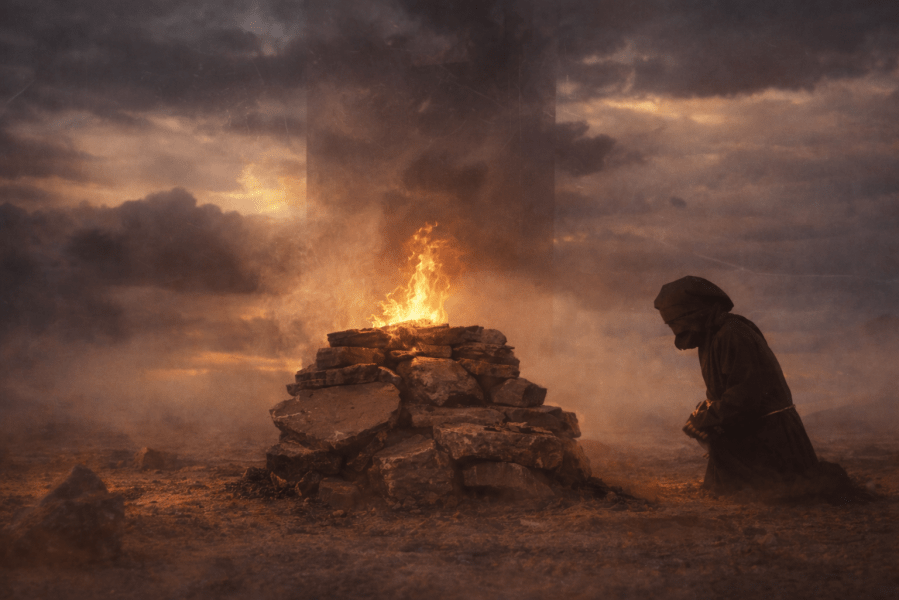
Abraham was a builder too, though you will not find his work on a skyline. He lived in tents, but he built altars. The tent said he was passing through. The altar said he belonged to God.
That contrast is easy to miss, but it explains his life. Most of us reverse it. We build our lives as if we are staying forever, and treat worship like a temporary stop. Abraham did the opposite. He held this world lightly and treated God seriously.
In Genesis 12, Abraham arrives in a land he has never seen. He left security behind, walked into uncertainty, and followed a voice he trusted. Then something happens. God appears, and Abraham builds an altar.
Notice the order.
He did not build the altar before the journey. He built it after.
The altar was not a guess about what God might do. It was a response to what God had already done. Faith had become sight, and Abraham stopped long enough to mark it.
That is where many of us miss it.
We move quickly from one season to the next. We pray for guidance, receive it, and keep going. We ask for provision, see it, and move on. We rarely pause to say, “God, You were here.”
Abraham paused.
His altar said, “God brought me here. God kept His word. God deserves my worship.”
The altar also made something else clear. It was not private.
Canaan was full of other gods. Other altars. Other voices competing for attention. Yet Abraham built his altar in plain view. It was a quiet but unmistakable declaration. This is the God I serve.
Faith has a way of becoming visible.
Not loud, not forced, but clear. A life shaped by God will eventually show it. The way you respond, the way you trust, the way you speak. Altars still exist, even if they are not made of stone.
Then there is one more layer.
The altar was not just about that moment. It was about the next one.
Later, when Abraham stumbled, Scripture says he returned to the place of the altar. He went back to where God had met him.
That is what altars do. They preserve memory.
They give you a place to return when your faith feels thin. They remind you that God was faithful then, and He has not changed now. Memory becomes strength.
We all have moments like that. A prayer answered. A door opened. A season where, looking back, you can say, “God was guiding me, even when I did not see it.”
The question is not whether those moments exist.
The question is whether you mark them.
Because if someone traced the path of your life, what would they find? A series of busy seasons, or quiet places where you stopped and said, “God, You were here.”
Abraham never built a house that lasted.
But he built altars that still speak.
And perhaps the most important thing you will ever build is not something you live in, but something you return to.
 A Good Word