Few moments feel as weighty as when the world goes quiet and the Word opens wide.
I found myself there recently—Psalm 119 resting gently on the pages, like an old friend whispering deep things. I had just read, “I hate vain thoughts: but thy law do I love.” The words were bold. No apology. No stammering. Just a man resolved.
And suddenly, I felt it too.
The ache for focus in a distracted world.
The longing for truth that doesn’t bend with the breeze.
The psalmist wasn’t making polite conversation. He was taking sides.
You see, Samekh—the Hebrew letter heading this section—is shaped like a protective circle. Fitting, because these verses speak of shields, hiding places, and boundaries drawn in courage.
“Depart from me, ye evildoers,” he declares. He’s not rude. He’s resolved. There’s a difference.
Sometimes walking with God means walking away—from double-mindedness, from the noise of deceit, even from people we love who pull us from light. That’s not harsh. That’s holy.
But it’s not a solo march.
The psalmist isn’t flexing his moral muscle. He’s leaning hard on God: “Hold thou me up.” He admits his trembling, his fear, and even his need for safety. And in that honesty, we find something beautiful—an image of a believer not standing tall, but kneeling low, held high by the strong arm of the Word.
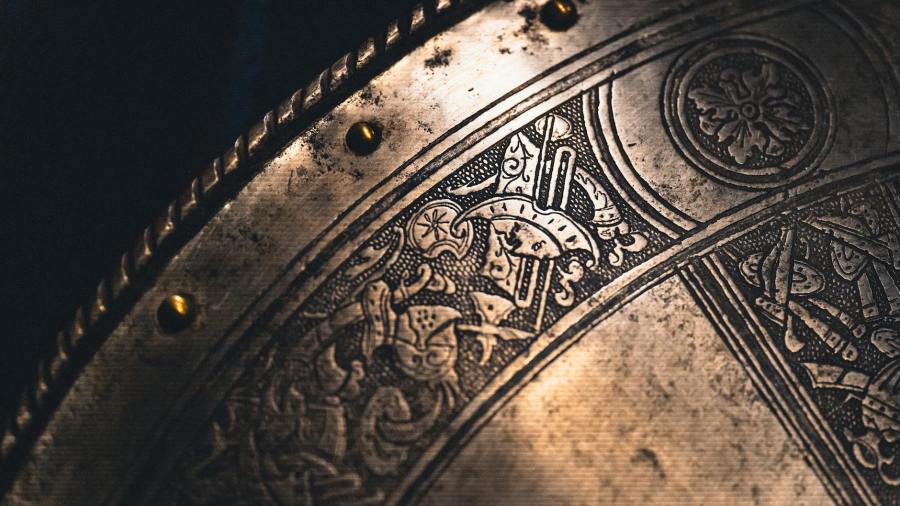
“Thou art my hiding place and my shield: I hope in thy word.” (v.114)
Don’t you love that? The way God wraps Himself around our weary hearts—part refuge, part armor. He shields us from what’s outside and shelters us from what’s within. In a world of leaky promises and crumbling platforms, He is both the sanctuary and the strength.
And the psalmist knows what we know: that keeping hope alive isn’t easy. He pleads, “Let me not be ashamed of my hope.” In other words, don’t let me crash and burn while clinging to You. Don’t let me trust in vain.
Isn’t that a prayer for our time?
Because we live in an age where cynicism dresses as wisdom, and hope is called naïve. But the psalmist stakes his life on something more eternal than applause or trending opinions. He leans into the unchanging.
“Thou puttest away all the wicked of the earth like dross.” (v.119)
It’s the language of the furnace. Dross is the waste—the useless sediment that floats to the top when silver is refined. God removes what’s impure. He doesn’t do it out of spite, but out of holiness. And the psalmist? He doesn’t argue with that. He worships it. “Therefore I love thy testimonies.”
And then comes the verse that lingers like a soft echo:
“My flesh trembleth for fear of thee; and I am afraid of thy judgments.” (v.120)
Not a fear that runs from God—but one that runs to Him.
The kind that bows before justice, marvels at mercy, and knows that both are found in the same hands.
This is holy fear. Not the fear of punishment, but the awe of Presence.
It’s the trembling of standing on sacred ground.
It’s the hush that comes when the King walks in.
So if you’ve ever felt like a soul in a storm, this passage is your anchor.
If you’ve ever loved God’s Word enough to swim against the current, this is your anthem.
And if your heart has ever whispered, “Lord, hold me up,” this is your psalm.
You don’t need to be loud. You don’t need to be strong.
You just need to be near.
There’s a shield in the shadows.
And His name… is Faithful.
 A Good Word